Best Well Water Filters: An Engineer’s Buyer Framework
There is no single "best" well water filter — your geology decides. An engineer's framework: test first, then match sediment, carbon, RO, UV, and iron removal to your results.
Reverse osmosis, carbon and softeners – how each system works and which one fits your home.
There is no single "best" well water filter — your geology decides. An engineer's framework: test first, then match sediment, carbon, RO, UV, and iron removal to your results.
Under sink filters are the best point-of-use option — and still flawed. An engineer on RO waste, filters that expire invisibly, the second-faucet problem, and why the fixture and the filter never talk to each other.
Not everyone needs a water filter. An engineer's six-question framework — your water report, your plumbing's age, your source, and your household — to decide if you actually do.
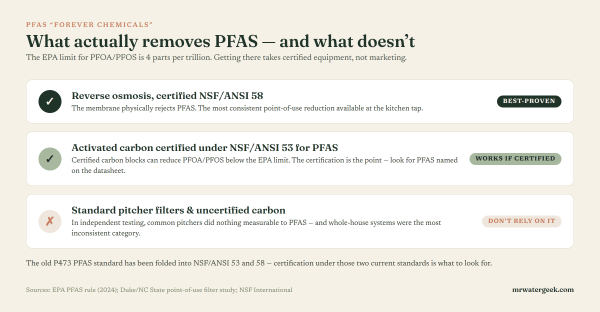
An engineer explains the three filtration technologies that actually remove PFAS — activated carbon block, reverse osmosis, and ion exchange — how to verify NSF certification, and what the EPA's 2024 rule really requires.
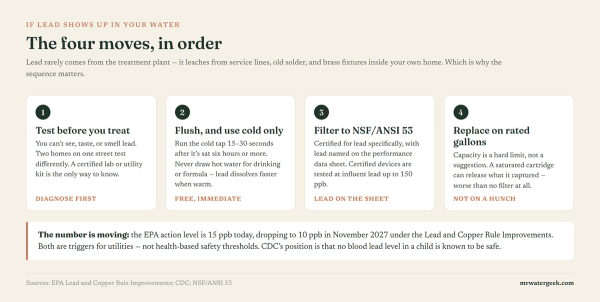
Engineer with 9 years at Kohler ranks the best water filters for lead removal. Covers NSF 53 certification, carbon block vs RO, and how to test your water for lead.
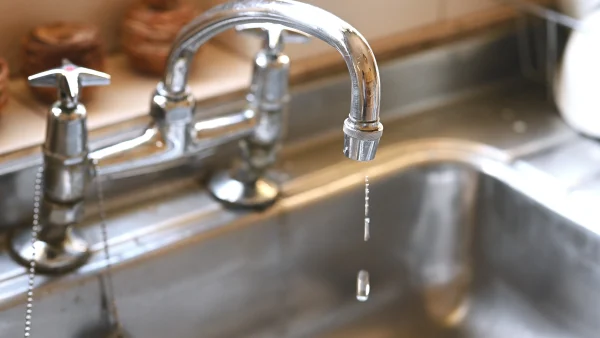
Kitchen faucets made of brass can leach lead into your drinking water. An engineer explains the 1986–2014 lead window, what to test for, and what to look for in a new faucet.
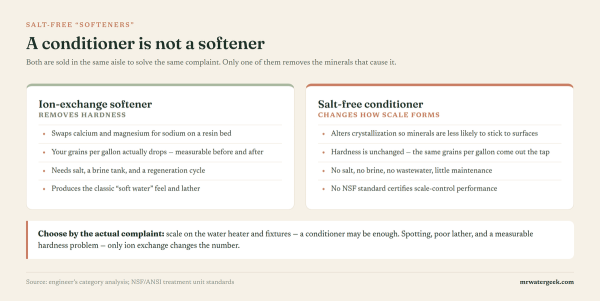
A salt-free “water softener” doesn’t actually soften water — it’s a conditioner. It uses Template Assisted Crystallization (TAC) to prevent scale buildup, but the calcium and magnesium stay in your…
This post is dedicated to explaining what a whole home water filter is, how it works, and what you should know about it.
Keep reading for my side-by-side comparison of salt vs salt-free water softeners and help simplify your selection process.
Is Monarch worth it? Probably not, according to Monarch Water Softener reviews. There are better options out there.