Filtration Systems
Read This Before You Switch to Bottled Water
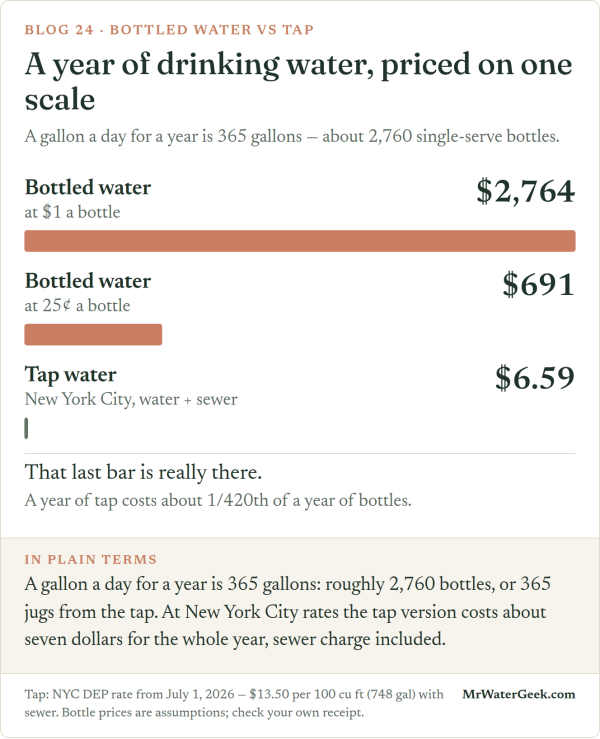
FDA regulates bottled, EPA regulates tap, and the standards track closely. An engineer on labels, the lead limits, microplastics, and real cost.

Reverse osmosis, carbon and softeners – how each system works and which one fits your home.
Strips, mail-in kits, or a certified lab? An engineer on what EPA recommends, what to test for, how to sample, and how to read the numbers.
FDA regulates bottled, EPA regulates tap, and the standards track closely. An engineer on labels, the lead limits, microplastics, and real cost.
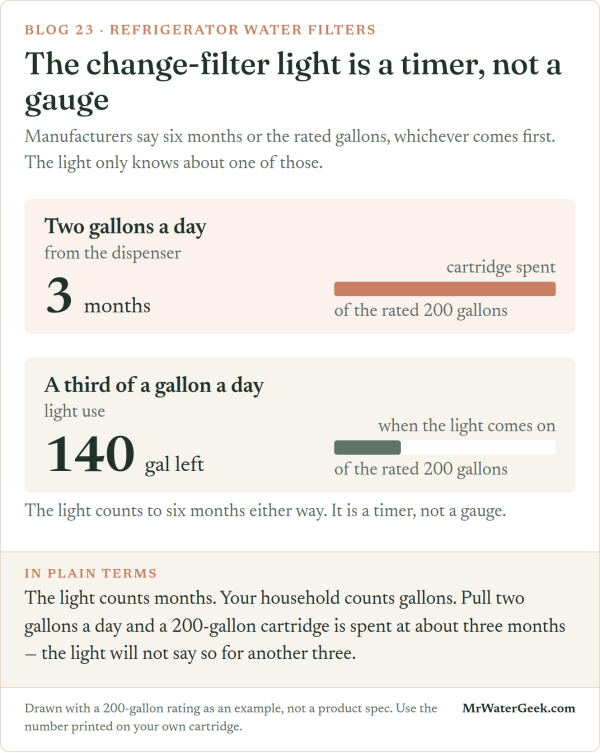
Fridge filters are better than most assume. An engineer on verifying certification, replacement intervals, and why "compatible" cartridges are untested.
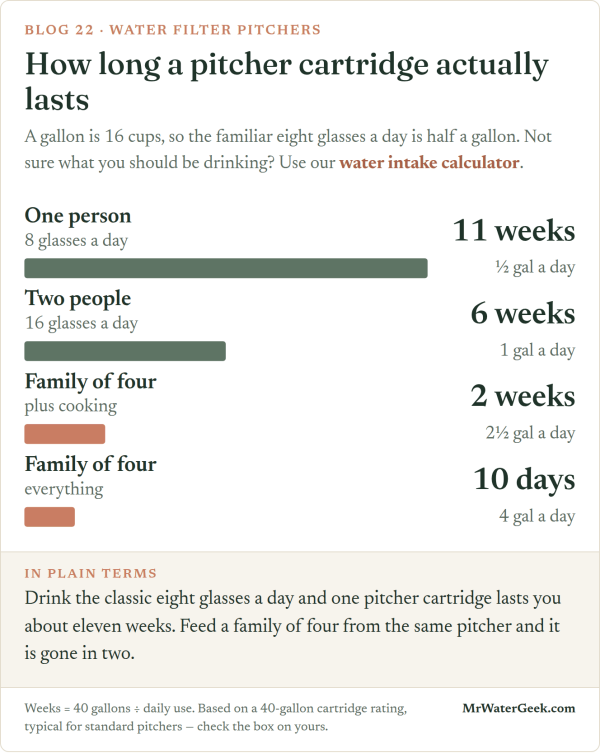
Most pitchers are certified for taste, not health. An engineer on what they remove, the capacity math nobody runs, and when a pitcher is the right buy.
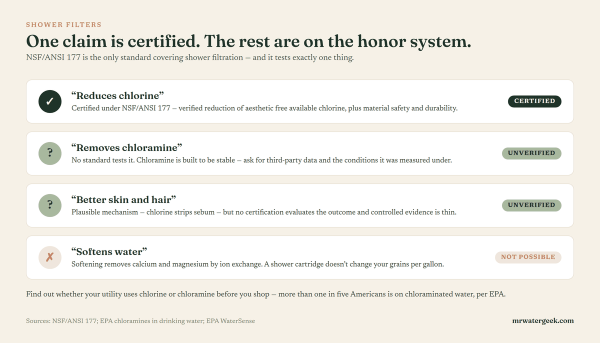
Only one shower filter claim is certified — chlorine, under NSF/ANSI 177. An engineer on chloramine, heat, hardness, and the skin and hair evidence.
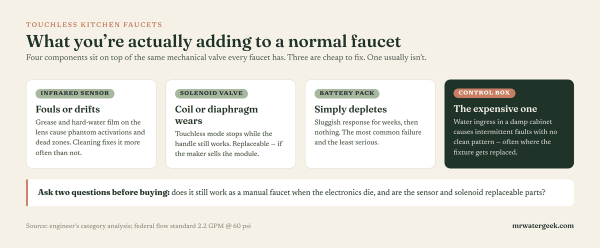
A faucet engineer on how touchless faucets work, the two questions that decide whether yours lasts, water savings, and what actually breaks.
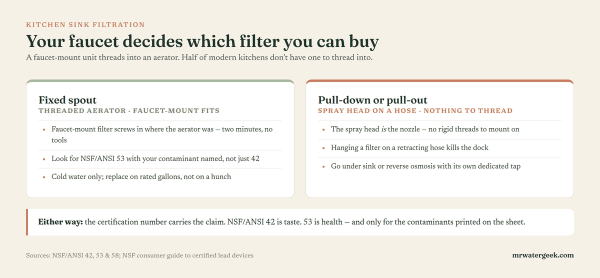
Faucet-mount filters are cheap and certified — but they won’t fit a pull-down faucet. An engineer on what they remove, what they don’t, and the alternatives.

What the AAP and CDC actually tell parents about lead, fluoride, formula water, PFAS, and microplastics — from primary sources, without the alarm.
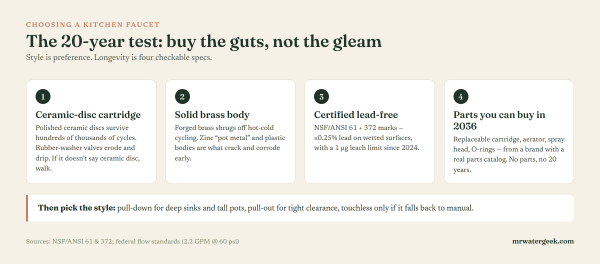
Durable kitchen faucets share four traits. An engineer walks through every type — and the guts to verify before you pay.
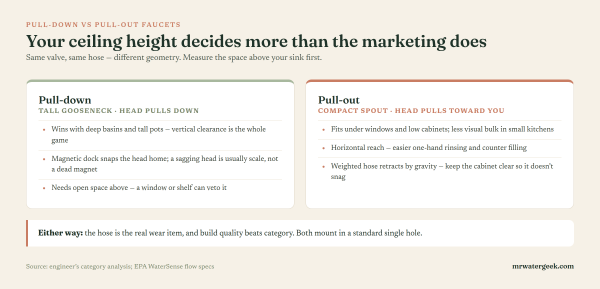
Same valve, different geometry. A faucet engineer on when a pull-down wins, when a pull-out wins, and what actually breaks on each.