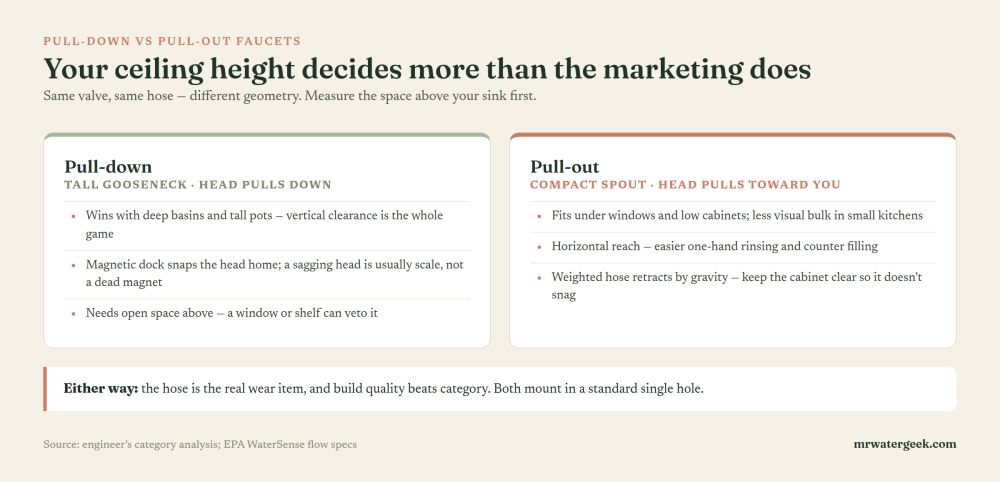
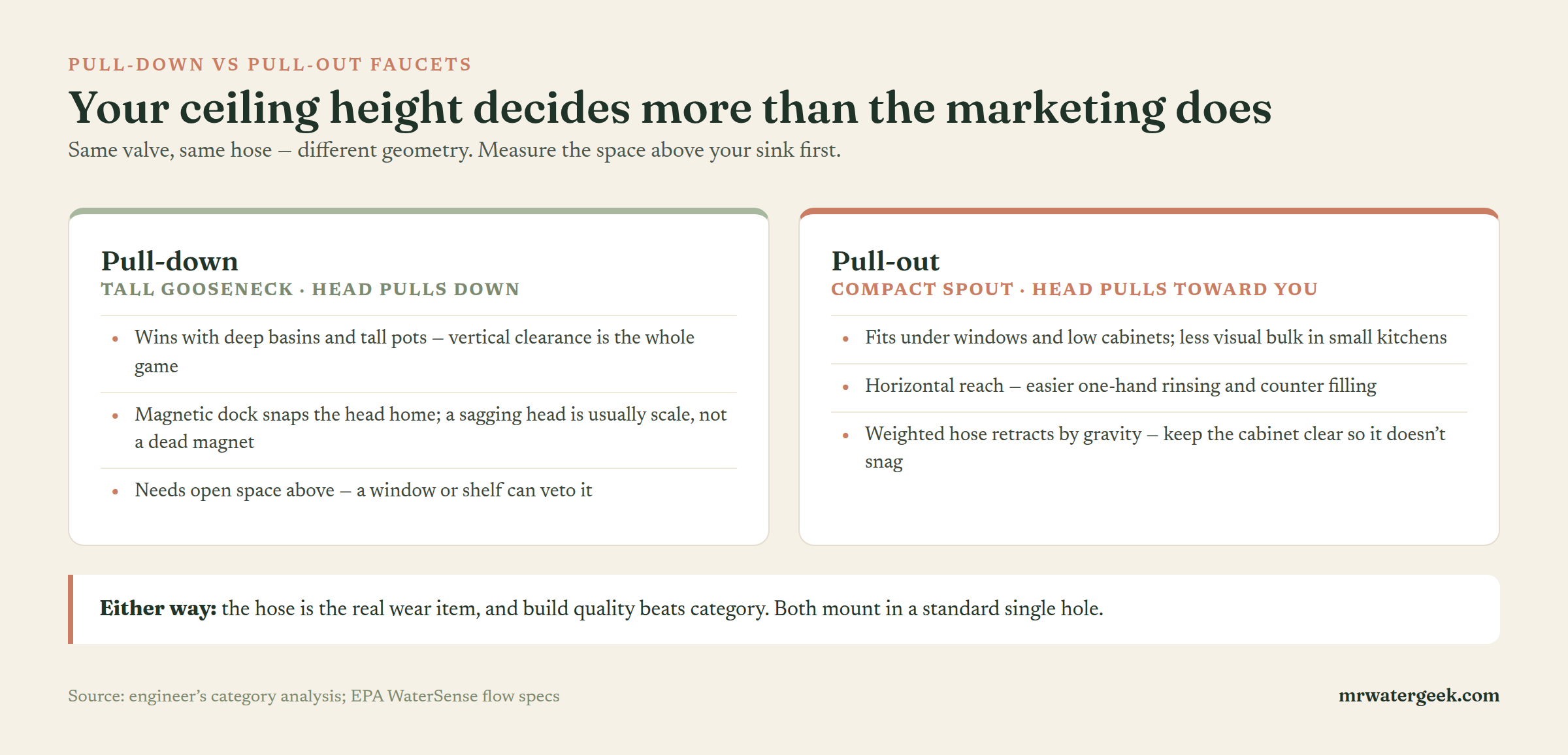
A pull-down faucet uses a tall gooseneck spout with a spray head that pulls straight down into the basin; a pull-out uses a lower spout with a spray head that pulls horizontally toward you. Choose a pull-down when you have sink depth, want to fill tall pots, and have clearance above the counter — choose a pull-out when a window, shelf, or low cabinet caps your height, or the kitchen is tight.
Key Takeaways — Which One Should You Actually Buy?
The spout does most of the deciding for you. Measure the vertical space above your sink first: if a window sill or upper cabinet sits close, a tall pull-down won’t dock cleanly, and a pull-out wins by default. Have the clearance and a deep basin? The pull-down’s reach and pot-filling height are hard to beat. Both use similar valves and hoses, so build quality and the docking mechanism matter more than the category itself.
BEFORE YOU BUY
The faucet is only half the story
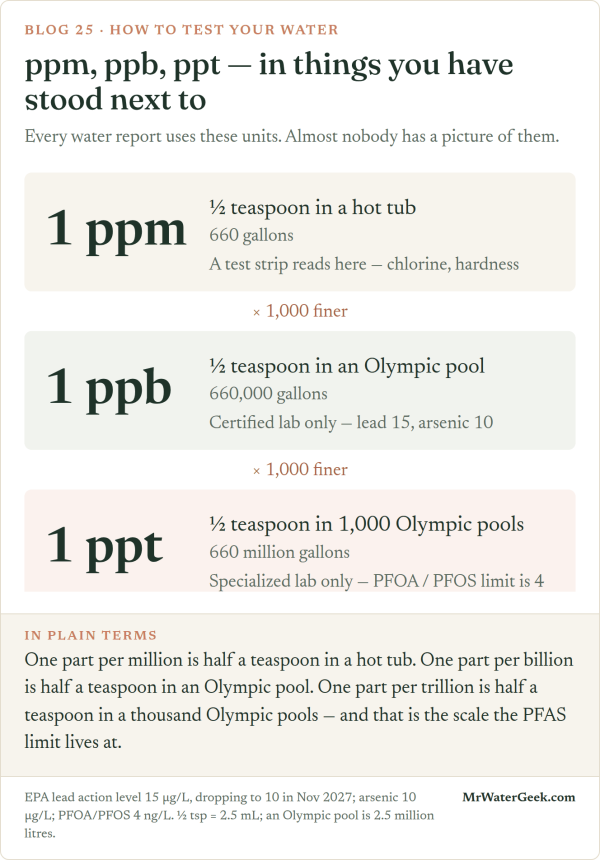
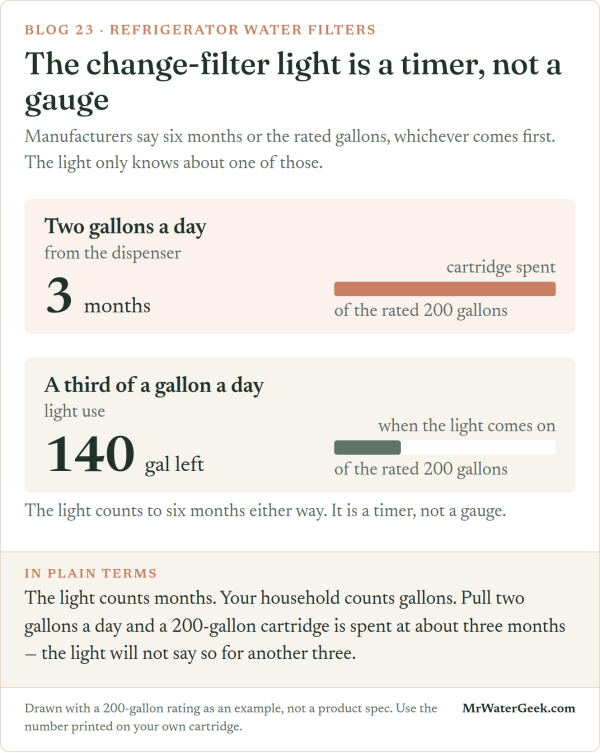
Whichever spout you pick, it’s worth knowing what’s actually coming through the pipe. Look up your area in 30 seconds.
The Mechanical Difference: What’s Actually Inside Each
Both types are, underneath, the same machine: a mixing valve, a flexible hose that runs down through the spout and into the cabinet, and a retraction system that pulls the hose back home. The category name only describes the spout shape and the direction the spray head travels.
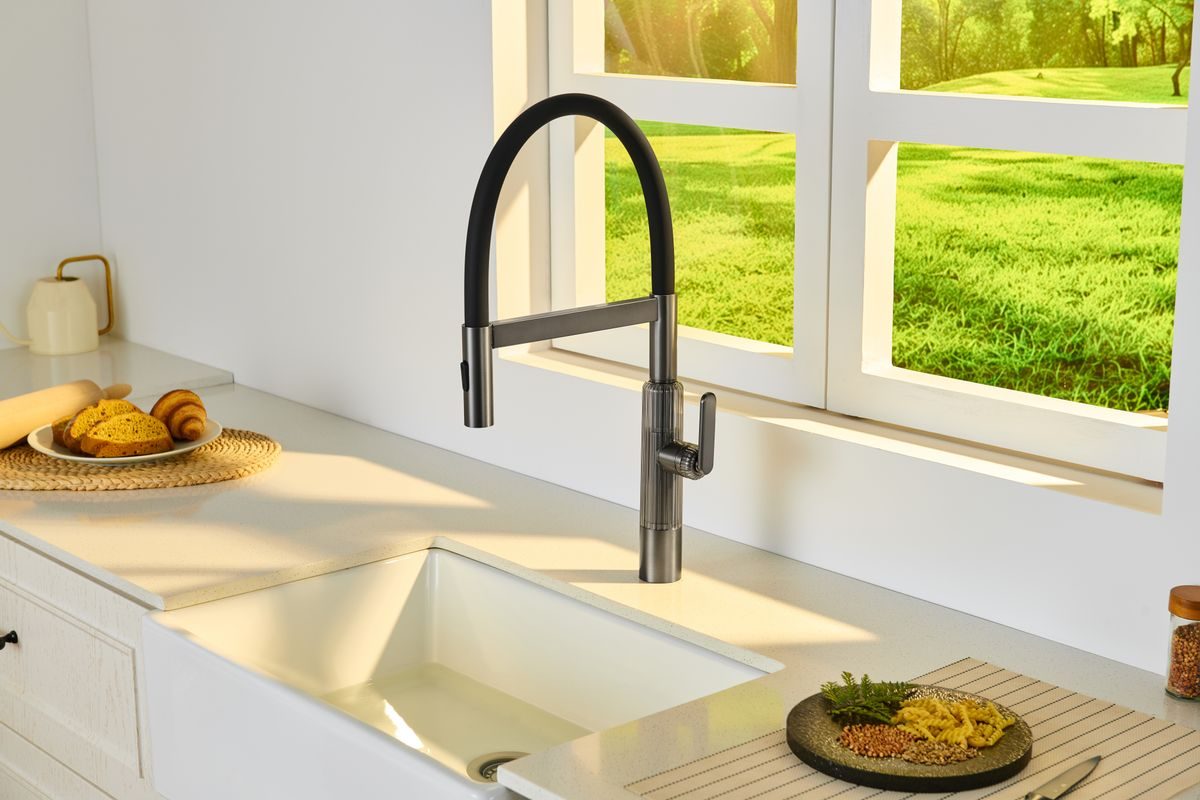
A pull down kitchen faucet sits on a tall arched or gooseneck spout, often 15 to 18 inches high. The spray head is the top of that arc, and you pull it straight down toward the basin. When you let go, it needs to seat itself back at the top of the spout — that’s where docking hardware comes in. Most modern designs use a magnet: a magnet in the spray head and a matching plate in the spout snap together. Older or budget designs lean on a plain friction fit or a small counterweight.
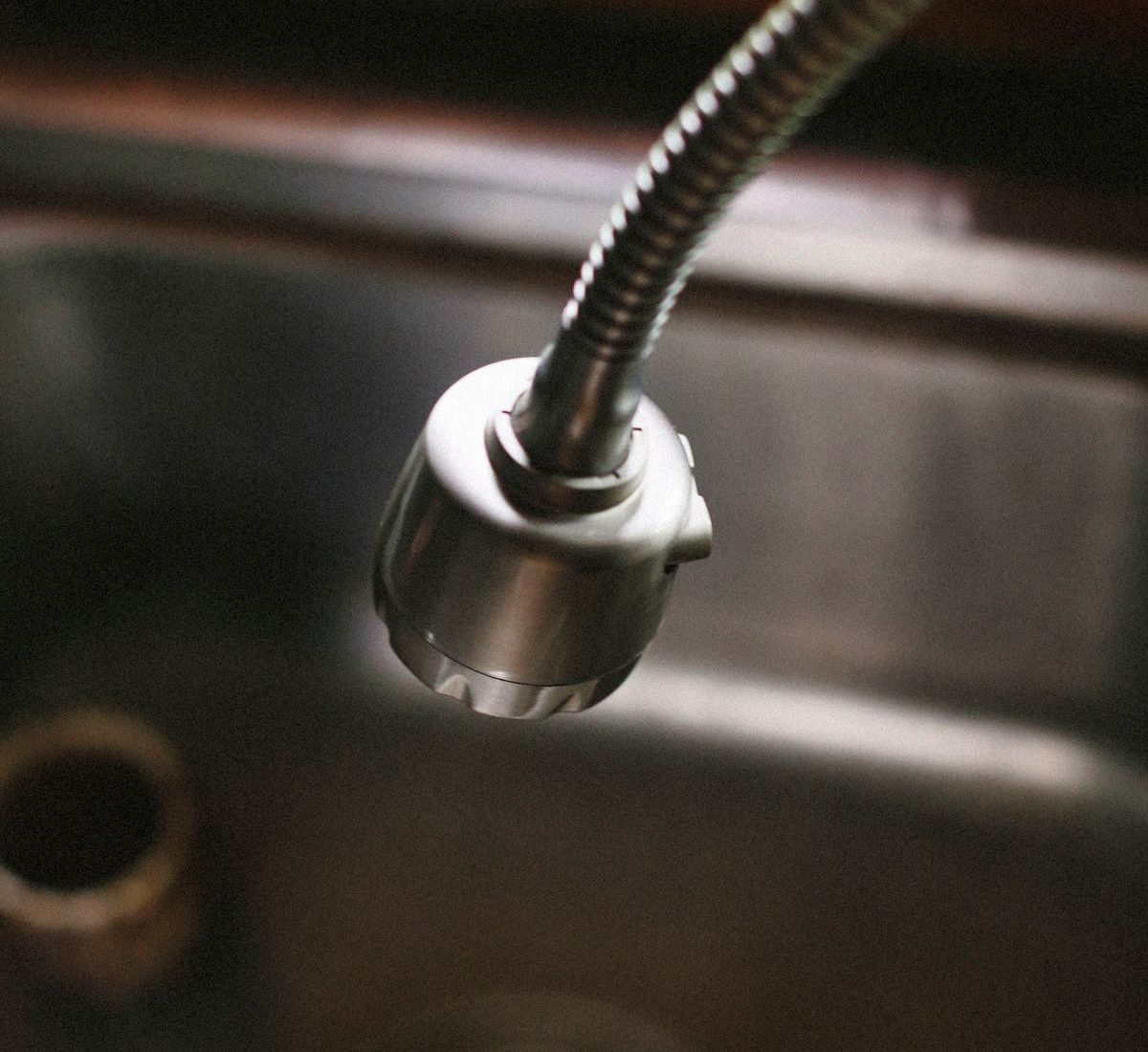
A pull out kitchen faucet uses a shorter, more compact spout, and the spray head is essentially the whole nozzle. You pull it out and toward you, roughly horizontal, extending the hose across the sink. Retraction here almost always relies on gravity: a weight (or a small pulley-and-weight assembly) clamped onto the hose inside the cabinet drags it back down as you release, re-seating the head in the spout. Some also add a light spring. Because the head docks by dropping into the spout rather than clinging to it, pull-outs rarely need a magnet at all.
That single design choice — where the head docks and what holds it there — drives most of the differences that follow. If you want the wider map of faucet styles, see my guide to types of kitchen faucets.
When a Pull-Down Wins
Deep sinks and tall cookware are the pull-down’s home turf. That high spout clears a stockpot or a sheet pan without you tilting it under the stream, and the straight-down spray reaches the far corners of a big single-basin sink. If you cook with volume, the extra height earns its keep every day.
Clearance has to cooperate, though. A pull-down assumes open space above the counter — no window ledge or cabinet crowding the top of that arc. In an island or a sink with nothing overhead, that’s fine, and the tall silhouette reads as the more modern, high-end look. Rinsing a deep basin is easier too, because you’re pulling the head down into the bowl rather than fighting to angle a low spout downward. For most open, deep-sink kitchens, the pull-down is the default I’d reach for.
When a Pull-Out Wins
Low clearance flips the decision instantly. A sink under a window is the classic case: raise the sill or drop a shelf close to the deck, and a tall gooseneck simply won’t fit or won’t dock. A pull-out’s short spout tucks under that ledge with room to spare.
Tight and small kitchens favor it for the same reason — less visual bulk over the counter. The pull-out also has a real ergonomic edge for one-hand rinsing: because the head pulls straight toward you, you can grab it, aim it around the sink, and rinse a plate without reaching up and over a high arc. Shorter users often find it less of a stretch. And in RVs, tiny homes, wet bars, and any cabinet-height-constrained spot, the compact spout is the only thing that fits. If reach matters more than height, this is your faucet.
| Pull-down | Pull-out | |
|---|---|---|
| Clearance needed | Tall — high-arc spout wants open space above the sink | Low — fits under windows and shelves |
| Best sink | Deep single basin; big pots and sheet pans | Shallow or double basin; small kitchens, RVs |
| Reach | Downward rinsing power inside the basin | Horizontal reach to counters and pitchers beside the sink |
| Retraction | Weighted hose or spring pulls the head home | Weight-and-pulley or gravity; hose does the work |
| Docking | Magnetic dock (watch for sag as it ages) | Friction or snap fit into the spout |
| Best for | Deep-sink households that cook in volume | Tight clearance, counter filling, small kitchens |
WORTH A LOOK
A new faucet won’t fix old water
Spray pattern and reach are comfort. What’s in the water is health. See what’s in yours before you spend on hardware.
Failure Modes & Durability: What Actually Breaks
After years of building these, I can tell you the valve rarely fails first. The moving parts you touch every day wear out long before the ceramic cartridge does. Here’s what I watch on each type.
Pull-down, the magnetic dock. Magnets don’t really lose strength in normal use, but the fit around them does. Mineral scale builds on the docking plate, gunk collects on the spray head’s landing surface, and over time the head starts to sag or hang crooked instead of snapping flush. Nine times out of ten a droopy pull-down is a cleaning problem, not a dead magnet — wipe the mating faces and it snaps home again. A weighted (non-magnetic) pull-down can sag if the head is heavy and the counterweight is undersized.
Pull-out, the hose weight. The weight-and-pulley system is dead simple, which is its virtue. What fails is the hose itself: repeated flexing at the same bend point cracks the outer sleeve, and the weight can slip on the hose or, in cramped cabinets, snag on a shutoff valve or a stored bottle so the head won’t retract fully. Reposition the weight and clear the cabinet and it usually behaves.
Common to both. The hose is the real wear item — the braided or PEX-lined line that quick-connects under the deck. Kinking, UV, and hard water shorten its life, and a weeping quick-connect is a routine repair, not a catastrophe. Rubber gaskets and O-rings at the spray-head coupling harden and leak over years, especially with hot water and scale. None of this is category-specific; it comes down to hose quality and the water running through it. Speaking of which — if you’re on an older home’s plumbing, read up on lead and kitchen faucet water quality before you assume the faucet is the problem.
Ergonomics, Reach & Spray Patterns
Reach is where the two feel most different in the hand. A pull-down gives you vertical reach — great for filling and for hosing down a tall pot in the basin — but you’re working downward into the sink. A pull-out gives you horizontal reach out over the counter, which is why watering a plant on the sill or filling a pot resting on the counter is easier with one.
Spray patterns are largely a wash between the two, because they’re a function of the spray head, not the spout. Most heads toggle between an aerated stream for filling and a stronger spray for rinsing; better ones add a pause button and a boost setting. Flow rate is capped by regulation, not by faucet type — federal law limits kitchen faucets to 2.2 GPM at 60 psi, and several states (California, Colorado) require 1.8 GPM or lower. (The EPA’s WaterSense label applies to bathroom faucets at ≤1.5 GPM — there is no WaterSense label for kitchen faucets.) A heavier all-metal spray head feels more solid but taxes the dock and hose over time; a lighter head is kinder to the retraction system but can feel cheap. That trade-off, more than the pull-down-versus-pull-out label, is what separates a good faucet from a frustrating one.
ONE LAST THING
Pick the spout. Then check the water.
You’ve sorted the hardware. Now spend 30 seconds on what’s coming through it — it’s the part that actually affects your health.
FAQ
Pull down vs pull out faucet — which is better? Neither is universally better; it depends on your clearance and sink. Pull-downs suit deep sinks and open counters with height to fill tall pots. Pull-outs suit low clearance under a window, small kitchens, and one-hand rinsing. Measure the space above your sink and let that decide.
Which lasts longer, a pull-down or a pull-out? Roughly the same. Both share a valve, a hose, and a retraction system, so lifespan tracks build quality — hose material and gasket quality — far more than category. The pull-out’s weighted hose is mechanically simpler, but a well-made magnetic pull-down holds up just as long with occasional cleaning.
Do pull-down faucets lose their magnetic dock over time? The magnet itself rarely weakens. What causes a sagging head is scale and grime on the docking surfaces, or an undersized counterweight on non-magnetic models. Wipe the mating faces clean and the head usually snaps back into place.
What’s the best pull down kitchen faucet setup for a deep sink? Look for a spout tall enough to clear your tallest pot with margin, a magnetic dock rather than plain friction, and a spray head that isn’t so heavy it drags the dock down. Match the arc height to your overhead clearance so it seats cleanly.
Can I swap a pull-out for a pull-down in the same hole? Usually yes — both mount in a standard single hole and use similar supply and hose connections. The catch is height: confirm the taller pull-down clears any window or cabinet above before you buy, since that’s the one thing a swap can’t fix.
Shashank — 9 years at Kohler building water products. Currently building the next generation of water health products.