Durable kitchen faucets share four traits: a ceramic-disc cartridge, a solid brass body, a valve you can service, and replacement parts you can still buy in a decade. Everything else — pull-down versus pull-out, touchless, finish color — is preference layered on top of that mechanical core. Choose the type that fits how you actually use the sink, then verify the guts before you pay.
Key Takeaways — What Actually Makes a Faucet Last?
After 9 years building faucets at Kohler, I stopped judging them by looks. A 20-year faucet comes down to the cartridge and the body. Ceramic discs outlast rubber-washer valves by an order of magnitude, and a forged brass body won’t crack the way zinc or plastic does under thermal cycling. Match the type to your use case — deep pull-down for big pots, prep faucet for a second basin — then confirm the mechanism and whether parts stay available. Buy the guts, not the gleam.
BEFORE YOU BUY
Your faucet is only as clean as the water behind it
A lead-free brass body matters more if you know what’s in your tap water. Check your ZIP first.
The Main Types of Kitchen Faucets, Explained
Faucet marketing loves to blur categories, so let me sort them the way an engineer does — by spout mechanism, handle count, and mounting. Once you see the taxonomy, picking gets easy.
Pull-down. The spray head pulls straight down into the basin on a hose that retracts into a tall, gooseneck spout. It’s the dominant kitchen faucet type today because the high arc clears stockpots and the downward spray rinses efficiently. The failure point to watch is the retraction system — a weight or spring on the hose and the docking magnet or nub that holds the head. Cheap docking wears out and the head sags.
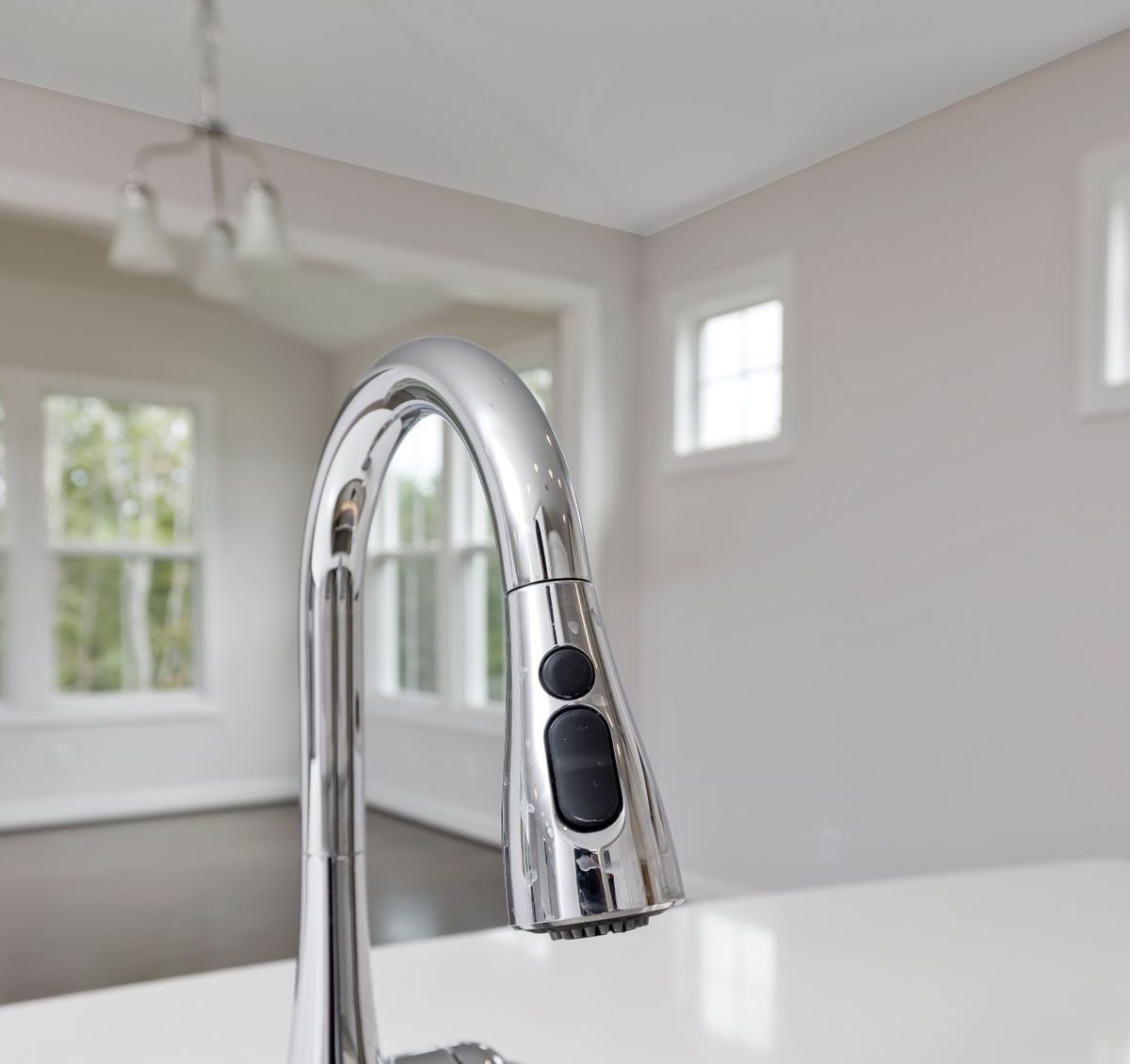
Pull-out. The spray head pulls horizontally out of a lower, straighter spout. It gives you more reach toward the counter or a side basin and suits lower-clearance situations (a window behind the sink). Same hose-and-head mechanics, different geometry. If you want the full breakdown, I wrote a dedicated pull-down vs pull-out comparison.
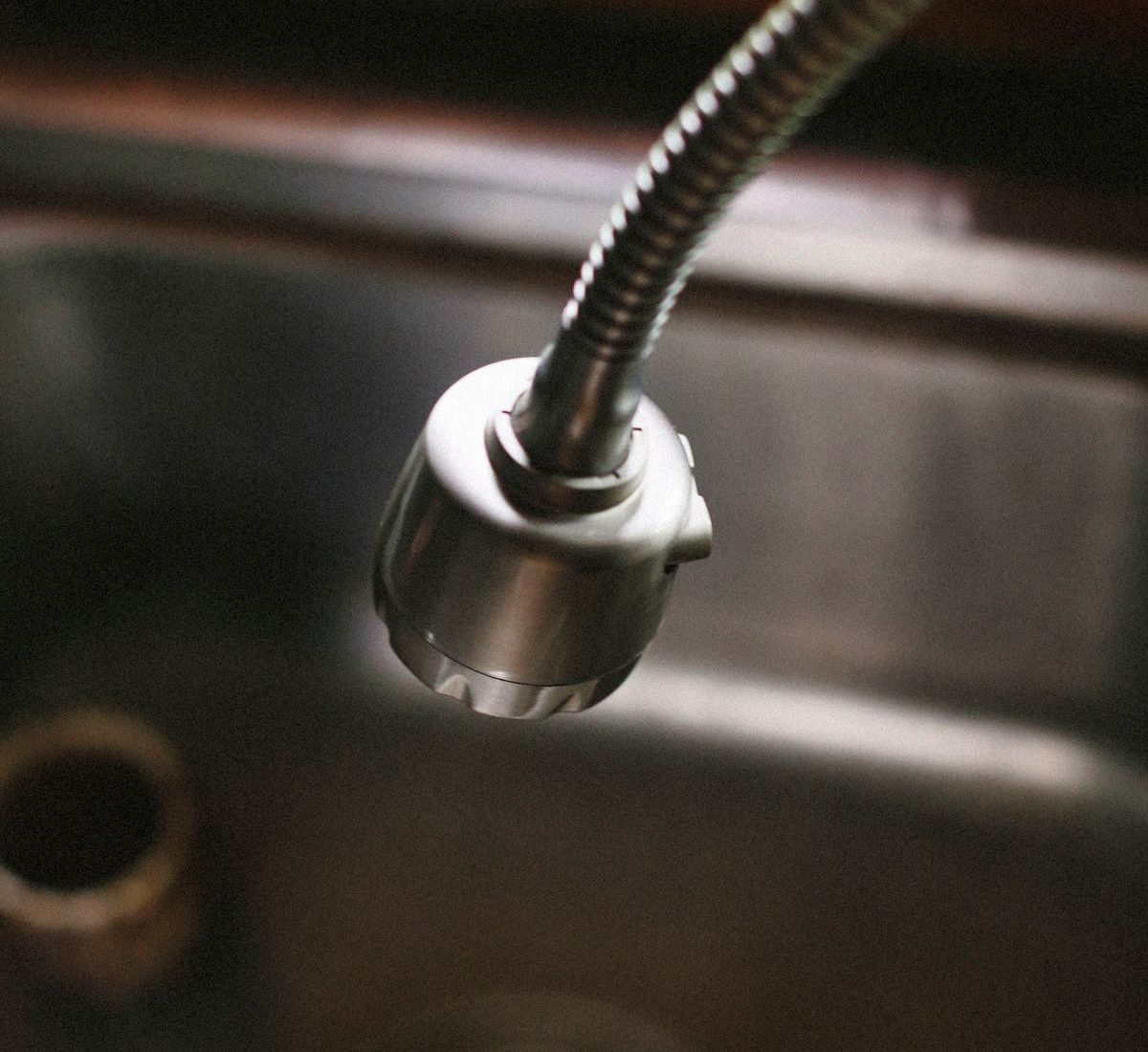
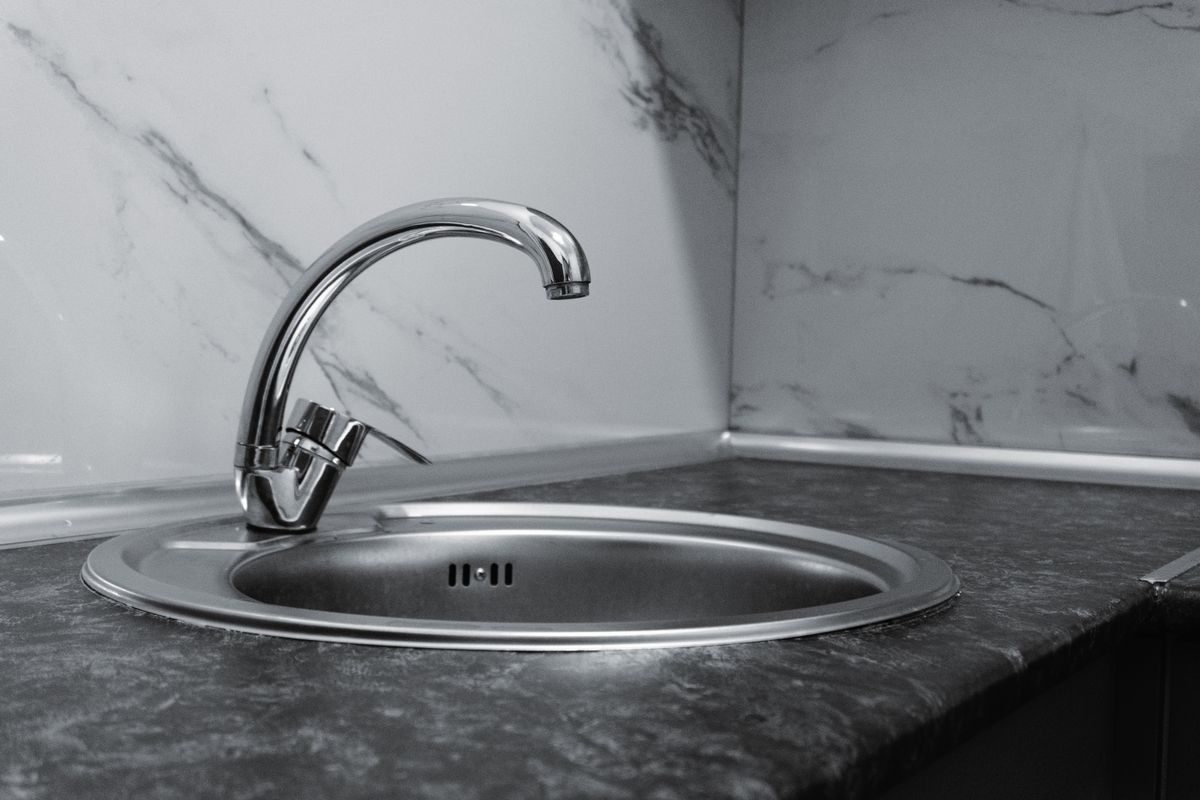
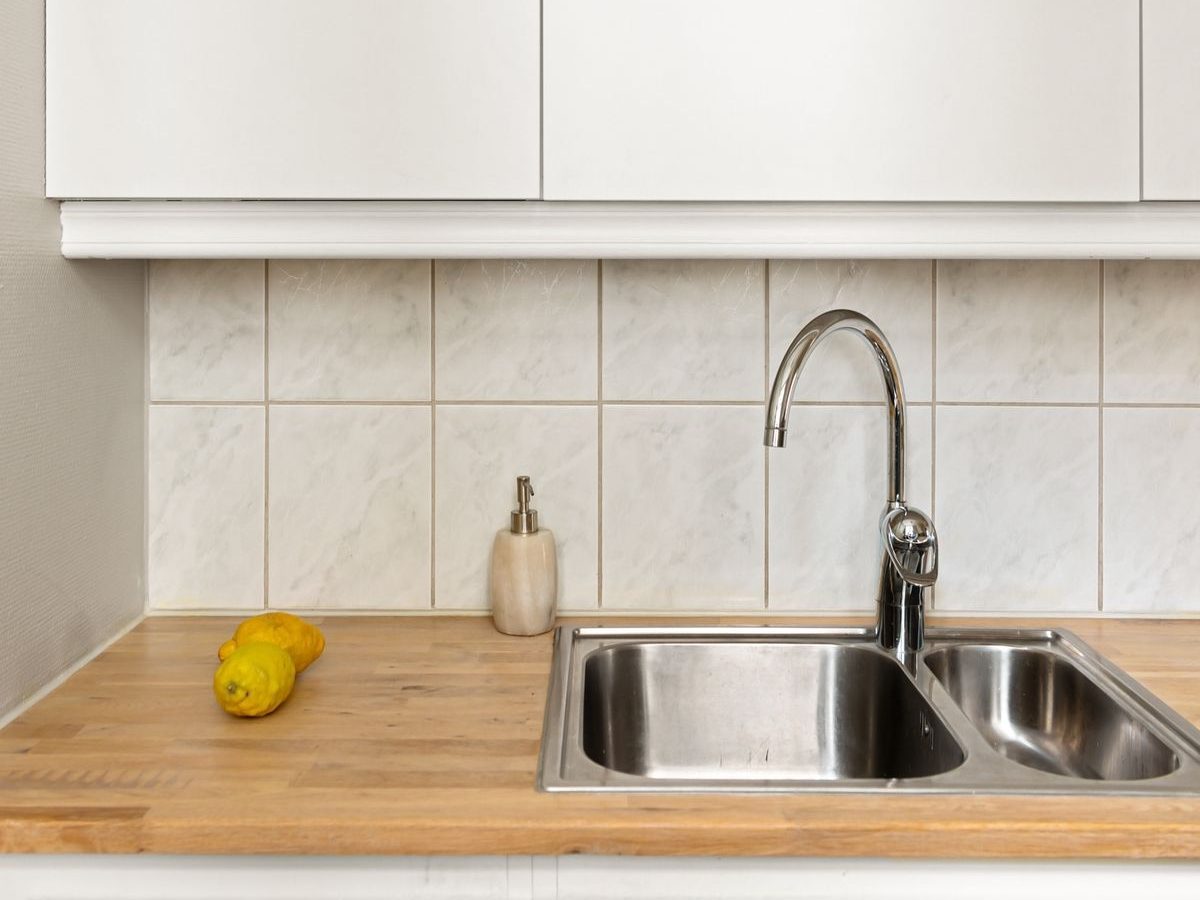
Single-handle. One lever controls flow and temperature through a single ceramic-disc mixing cartridge. Fewer moving parts, fewer leak points, one-hand operation when your other hand is full. It’s the most common modern configuration for good reason.
Double-handle (widespread). Separate hot and cold handles, each over its own valve, feeding a central spout. Two cartridges instead of one, a traditional look, and finer temperature control. More holes to seal, more parts to service.
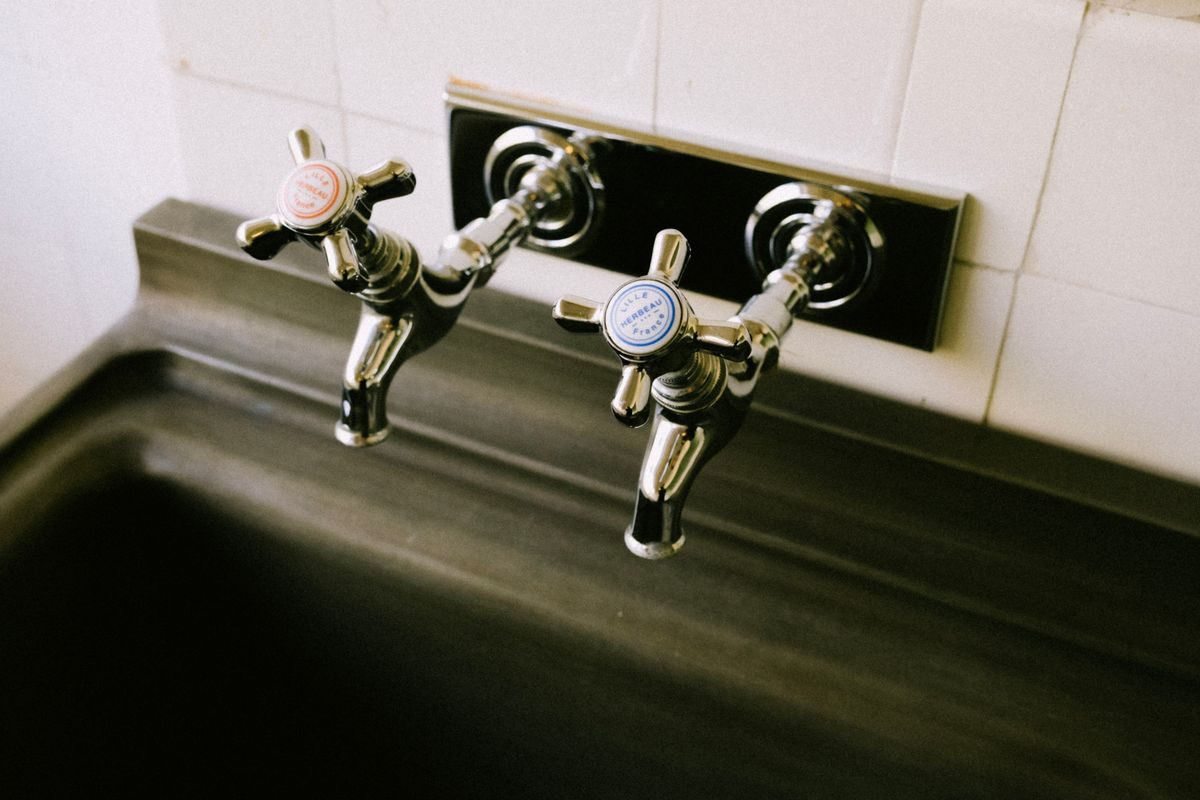
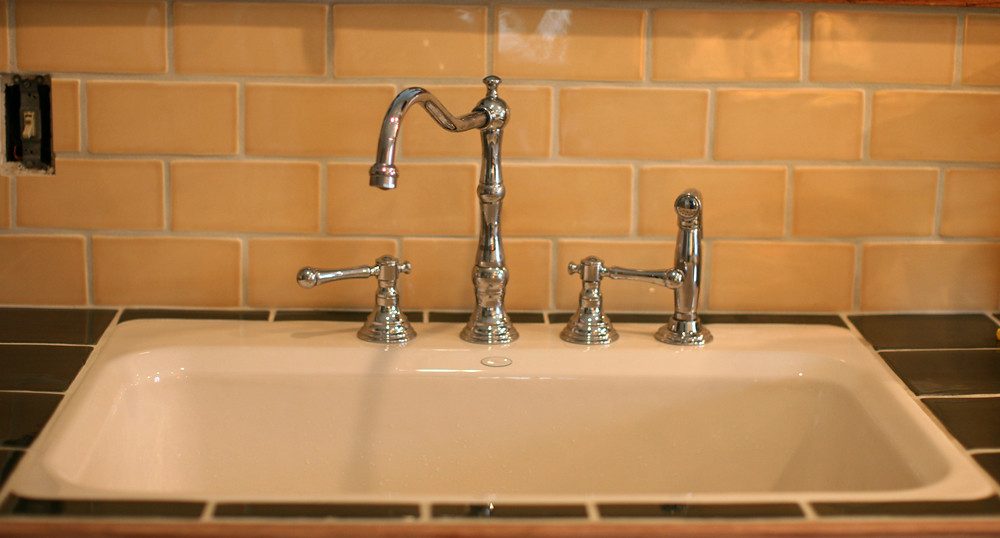
Bridge. Hot and cold valves connected by an exposed horizontal “bridge” tube that mixes the water before it reaches the spout. A design statement common in farmhouse and vintage kitchens. Beautiful, but the exposed bridge and extra joints give you more surfaces to keep clean and more potential seepage points.
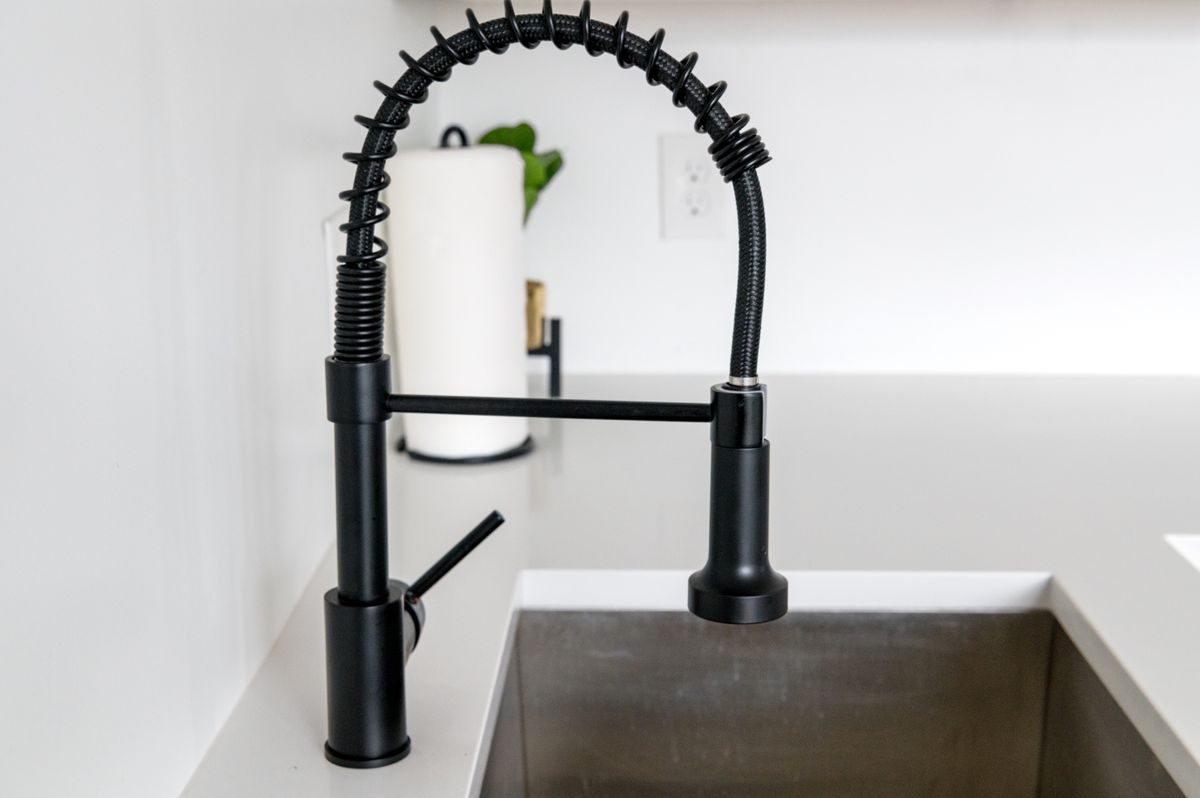
Commercial / pre-rinse. The tall spring-coil faucet you see in restaurant kitchens, now popular in homes. A high-flow spray head hangs from an articulated spring. Enormous clearance and rinsing power, but it demands ceiling and cabinet clearance and a truly solid valve, because these get used hard.
Bar / prep. A scaled-down faucet for a secondary basin — an island prep sink or a wet bar. Lower flow, smaller footprint, often a single lever. Not a main-sink replacement; a companion.
Touchless. Any of the above with a sensor built in somewhere — usually near the base or under the spout — so a wave of the hand triggers the activity a handle otherwise would. Behind the sensor, a solenoid valve starts and stops the flow. A convenience layer, and one with its own failure modes I’ll cover below.
| Type | Mechanism | Best for | Watch-out |
|---|---|---|---|
| Pull-down | Spray head retracts down into a tall gooseneck spout | Deep sinks, stockpots, most modern kitchens | Docking magnet wears; head can sag |
| Pull-out | Head pulls horizontally from a lower spout | Low clearance, counter filling, small kitchens | Hose is the wear item |
| Single-handle | One lever, one mixing cartridge | One-hand operation, fewest leak points | Insist on ceramic disc |
| Double-handle | Separate hot/cold valves feeding one spout | Traditional looks, fine temperature control | Two cartridges to maintain |
| Bridge | Exposed crosspipe mixes before the spout | Farmhouse and vintage kitchens | More joints, more cleaning |
| Commercial / pre-rinse | High-flow head on an articulated spring | Heavy rinsing, serious cooks | Needs ceiling clearance and a solid valve |
| Bar / prep | Scaled-down faucet for a secondary basin | Island prep sinks, wet bars | Companion, not a replacement |
| Touchless | Sensor + solenoid valve; a wave replaces the handle | Messy-hands cooking, hygiene | Electronics add failure modes |
Single-Handle vs Double-Handle: When Each Makes Sense
Mechanically, a single-handle faucet simply has fewer things to go wrong. One cartridge mixes hot and cold, so you have one wear component, one seal set, one spot to service. When you’re rinsing a pan with one hand and holding a colander with the other, you nudge the lever with a wrist. That’s why single-handle dominates working kitchens.
Double-handle earns its place on aesthetics and precision. Two valves let you dial hot and cold independently, which some cooks prefer, and the widespread look anchors traditional and transitional kitchens. The trade-off is real: two cartridges to maintain, three deck penetrations to seal, and twice the odds of a slow drip developing over the years. Neither is “better.” A single-handle is the lower-maintenance, more ergonomic default; a double-handle is a considered style choice you accept slightly more upkeep for. In both cases, the cartridge material decides longevity — insist on ceramic disc, not rubber-washer compression.
Pull-Down vs Pull-Out (The Short Version)
Both are a kitchen faucet with sprayer integrated into the spout, which beats the old side-sprayer that always seemed to fail first. Pick a pull down kitchen faucet when you have vertical room and wash tall cookware — the high arc and downward spray do the heavy lifting. Pick pull-out when clearance is tight (a window or shelf above the sink) or you want extra reach across a wide or double basin. Mechanically they’re cousins: same hose, same spray head, same docking concern. The head’s docking strength and hose weight matter more than which style you choose. Full details in the pull-down vs pull-out comparison.
Touchless and Smart Faucets: When They’re Worth It
A touchless kitchen faucet adds an infrared sensor and a solenoid — an electrically actuated valve — on top of a normal manual valve. Wave or approach, the beam breaks, the solenoid opens. The appeal is legitimate: you don’t smear raw-chicken hands on the handle, and hands-free operation saves water during tasks where you’d otherwise leave it running.
Now the engineering caveats. You’ve added electronics to a device that lives in a wet, humid environment. The sensor can misfire — phantom activations, or dead zones where it doesn’t read your hand. The solenoid is a moving electromechanical part with a finite cycle life, and it usually runs on batteries (AA packs or a transformer) tucked under the sink. When the electronics die, a well-designed touchless faucet still works manually through its mechanical valve; a poorly designed one strands you. Before buying, confirm two things: it falls back to manual control, and the solenoid and sensor module are replaceable parts, not sealed into the body. Smart faucets that add voice control or metered dispensing pile on more electronics and more future failure points. Worth it if you cook constantly and value the hygiene; skip it if you want the fewest things that can break in 20 years.
THE PART NOBODY CHECKS
A lead-free faucet can’t fix a lead service line
The faucet is the last few inches. Find out what your water carries before it gets there.
Mounting Types: Deck-Mount vs Wall-Mount, Holes, and Escutcheons
How the faucet attaches decides what you can install without renovating. The two families are deck-mount and wall-mount.
Deck-mount faucets bolt through holes in the sink deck or countertop. This covers the overwhelming majority of kitchens. The critical number is your hole count. A modern single-handle pull-down typically needs one hole; add a side spray, soap dispenser, or air gap and you’ll use more. Double-handle and widespread setups usually want three holes (or an 8-inch spread). If your sink has extra holes you don’t need, an escutcheon — the base plate under the faucet — covers them. A single-hole faucet mounted on a three-hole sink uses a deck plate to bridge the gap. Measure before you buy: retrofitting hole counts means a new sink or a countertop drill job.
Wall-mount faucets plumb through the wall behind the sink, leaving the deck clear. They look clean, make counter wiping effortless, and pair well with farmhouse and vessel setups. The catch is that the rough-in plumbing must be right — spout projection has to reach the basin center, and in cold climates in-wall supply lines carry a freeze risk on exterior walls. Wall-mount is a design and plumbing commitment, not a swap you make on a weekend.
Spout Height and Reach: Clearance and Splash
Spout geometry is where people either love or resent their faucet, and it’s pure fluid mechanics. Two numbers matter: height (deck to the spout outlet) and reach (how far the water lands from the base).
A tall gooseneck gives you clearance to fill and wash big pots — but the higher the water falls into a shallow or flat-bottomed sink, the more it splashes back at you. That’s the trade. High-arc spouts pair best with a deep basin that absorbs the fall. Reach has to land the stream near the drain, roughly the center of the bowl; too little reach and water hits the front wall of the sink, too much and it overshoots into the far side or onto the divider of a double basin. Before buying, check the clearance above your sink — a window, upper cabinet, or shelf can veto a tall spout — and match spout height to basin depth so you’re not mopping the counter every time you rinse a glass.
Finishes and Durability: PVD vs Electroplated
Finish is where marketing and metallurgy collide, and it affects how the faucet ages. Two coating processes dominate.
Electroplated finishes (standard chrome, many nickel finishes) deposit a thin metal layer electrochemically. They look sharp and cost less, but the layer is softer and thinner, so it’s more prone to scratching, and over years in a wet environment it can pit or wear at high-touch spots.
PVD — physical vapor deposition — bonds the finish at a molecular level in a vacuum chamber, producing a coating that’s dramatically harder and far more resistant to scratching, corrosion, and tarnish. If a faucet advertises a lifetime finish warranty, it’s almost always PVD. For a 20-year faucet, PVD is worth the premium, especially in brushed and specialty colors (matte black, brushed gold, bronze) where a worn spot would show badly.
On appearance: brushed (satin) finishes hide water spots and fingerprints because the microscopic texture scatters light, which is why brushed nickel and stainless are the low-maintenance favorites. Polished chrome is the most durable-looking and easy to wipe, but it shows every fingerprint and water spot. Matte black looks fantastic and hides smudges but can show hard-water mineral spotting if your water is untreated. Finish is cosmetic — it doesn’t make the faucet last — but PVD versus electroplated is a real durability line, and it’s one of the few places paying more clearly buys you time.
The Faucet–Filter Question: What Your Faucet Has to Do With Your Water
Here’s the part home-improvement guides skip. A faucet isn’t just a valve — it’s the last surface your drinking water touches before it hits your glass, and the metal it’s made of matters. Historically, faucet bodies were brass alloyed with lead to make it easier to machine. Pre-2014 brass could legally contain up to 8% lead on wetted surfaces. That’s the last few inches of the journey, and it can add lead to water that left the treatment plant clean.
The 2014 federal “lead-free” rule changed the definition: wetted surfaces of pipes, fittings, and fixtures must now average no more than 0.25% lead by weighted calculation — down from the old 8%. Compliance is verified by two marks. NSF/ANSI 372 certifies that lead content, and NSF/ANSI 61 certifies that the product doesn’t leach unsafe contaminants into drinking water. In 2024, NSF/ANSI 61 was revised to a much tighter 1-microgram lead-leaching limit for faucets, replacing the previous 5-microgram allowance — a real tightening you can look for on newer certified products. When you shop, look for both the NSF/ANSI 61 and 372 marks. That’s how you verify “lead-free” is more than a label. I go deeper on this in kitchen faucets and lead in your water.
Then there’s filtered water. You have two paths. Some faucets integrate filtration or offer a filtered-water pathway built into the spout. More often, people run a separate dedicated faucet for filtered water fed by an NSF-certified water filter or reverse-osmosis system under the sink — that keeps your filter cartridge sized correctly and your main faucet free for dishes. If lead is your specific concern (a lead service line, older plumbing), a lead-free faucet reduces the fixture’s contribution, but it can’t strip lead the water already carries — for that you need certified point-of-use filtration. My guide to the best water filter for lead covers what actually works. The faucet and the filter are two different jobs; a durable, certified faucet is the foundation, and the filter does the removal.
FROM FAUCET TO GLASS
Know what’s in your water before you spend on a faucet
Lead, hardness, chlorine — your ZIP tells you what your fixture is up against.
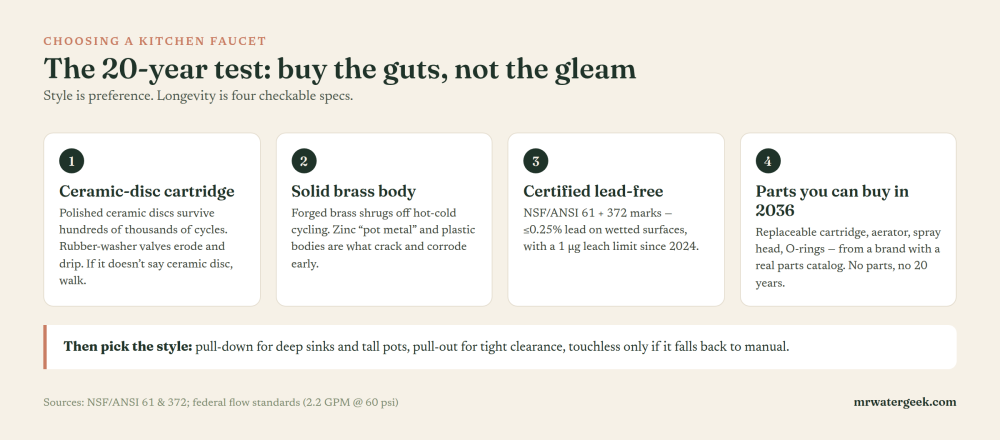
The 20-Year Test: What You’re Actually Buying
Strip away the type and the finish and a faucet’s lifespan rests on four things. Learn to check them and you’ll never overpay for gloss again.
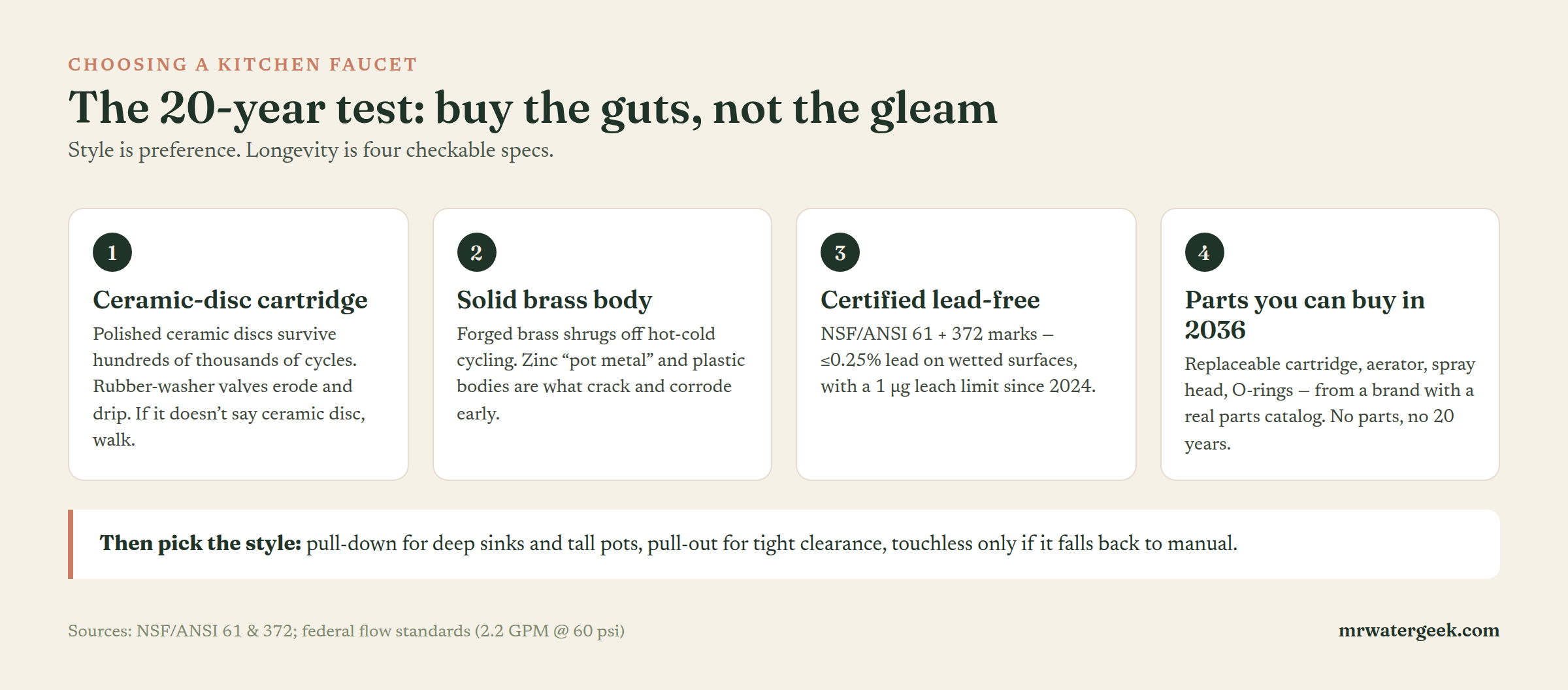
The cartridge. The valve that starts, stops, and mixes water is the single hardest-working part. A ceramic-disc cartridge uses two polished ceramic discs that slide against each other; ceramic is harder than most steels and nearly immune to the wear that destroys the rubber washers in old compression valves. Compression faucets drip because the washer erodes — ceramic discs routinely survive hundreds of thousands of cycles. If a faucet doesn’t specify ceramic disc, assume it’s a lesser mechanism and walk.
The body. Solid, forged brass resists corrosion and shrugs off the constant hot-cold thermal cycling that fatigues cheaper materials. Zinc-alloy (sometimes called “pot metal”) and plastic bodies cost less and are common on bargain faucets, but they’re the parts that crack, corrode at threads, and fail early. Heft is a decent first-pass tell — a brass faucet feels dense — but confirm the spec.
Flow rate. Federal law caps kitchen faucets at 2.2 GPM at 60 psi; several states (California, Colorado) require 1.8 GPM or lower, and the EPA’s WaterSense label marks bathroom faucets at 1.5 GPM. A well-designed aerator delivers a satisfying stream at lower flow — you want efficiency without a weak trickle, and a removable aerator you can clean of mineral buildup.
Serviceability. The one people forget. A faucet lasts 20 years only if you can replace the cartridge, the aerator, the spray head, and the O-rings when they eventually wear — and only if the manufacturer still makes those parts in a decade. Favor brands with a real warranty and a documented parts catalog. A gorgeous faucet from a company that vanishes, or one with a proprietary cartridge you can’t source, is a disposable faucet wearing a nice finish.
FAQ
What are the main types of kitchen faucets? The core types of kitchen faucets are pull-down, pull-out, single-handle, double-handle (widespread), bridge, commercial/pre-rinse, bar/prep, and touchless. They differ by spout mechanism, handle count, and mounting. Pull-down single-handle is the modern default for most kitchens because it clears tall cookware and operates one-handed.
Which kitchen faucet lasts the longest? Longevity comes from the mechanism, not the style. A faucet with a ceramic-disc cartridge and a solid forged-brass body, from a maker that still sells replacement parts, will outlast a fancier faucet built on a zinc or plastic body with a rubber-washer valve. Ceramic discs survive hundreds of thousands of cycles; rubber washers erode and drip within a few years.
Is a pull-down or pull-out faucet better? Neither is universally better. Choose pull-down for tall spout clearance and downward rinsing power over a deep basin; choose pull-out for tight overhead clearance (a window behind the sink) or extra horizontal reach across a wide sink. Mechanically they’re near-identical, so judge the hose and docking quality.
Are touchless kitchen faucets reliable? They can be, if two conditions hold: the faucet falls back to manual operation when the electronics die, and the sensor and solenoid are replaceable. You’re adding electronics to a wet environment, so there are more potential failure points than a purely mechanical faucet. The hygiene payoff is real if you cook a lot; if you want the fewest things that can break, stay manual.
What does “lead-free” mean on a faucet? Since the 2014 federal rule, “lead-free” means wetted surfaces average no more than 0.25% lead by weighted calculation — down from a prior allowance of up to 8%. Verify it with the NSF/ANSI 61 and NSF/ANSI 372 marks. NSF/ANSI 61 was tightened in 2024 to a 1-microgram lead-leaching limit for faucets.
Does a lead-free faucet mean my water is safe to drink? No. A lead-free faucet only limits what the fixture itself contributes. If lead enters upstream — a lead service line or old solder — the faucet can’t remove it. For that you need certified point-of-use filtration, such as an NSF-certified filter or reverse-osmosis system, in addition to a lead-free fixture.
Shashank — 9 years at Kohler building water products. Currently building the next generation of water health products.